📍Bergen County Specialists
30 years serving local homes and businesses
Mold Removal Services — Localized mold treatment under 10 sq ft with surface cleaning and preventive solutions
60 Minute Response
Average arrival across Bergen County—24/7/365
Professional Team
30+ Years Experience
$2M Insured
Complete Protection
Direct Billing
No Out-of-Pocket Cost
A+ Rating
Better Business Bureau
24/7 Emergency
Always Ready to Help
When mold covers less than 10 square feet on non-porous surfaces, targeted removal with proper cleaning solutions and moisture control prevents escalation. We handle bathroom mold, window condensation, and closet growth before professional remediation becomes necessary.
Daily shower use without adequate ventilation caused black mold growth in grout lines, caulking around tub, and on tile walls covering approximately 8 sq ft. Surface growth hadn't penetrated substrate but required professional cleaning and prevention.
Our Solutions:
Single-pane windows accumulated condensation during cold months, causing mold growth on wooden frames, sills, and surrounding drywall affecting 5-6 sq ft. Moisture damage softened wood and required surface treatment plus humidity control.
Our Solutions:
Clothing stored against exterior wall in corner closet blocked airflow, creating cold spot that accumulated moisture and grew mold on drywall covering 4 sq ft. Musty smell affected stored clothing requiring cleaning and prevention.
Our Solutions:
Cool concrete basement wall developed small mold spot (3 sq ft) from summer humidity and lack of dehumidification. Surface mold on painted concrete block hadn't spread but required treatment before becoming larger problem.
Our Solutions:
Blocked or dirty return vents caused elevated humidity near registers, leading to mold growth on drywall and register surrounds (5-8 sq ft). Symptoms included recurring odor when HVAC ran and visible staining around vents.
Our Solutions:
See how we've helped local homes and businesses
Crawl Space Encapsulation
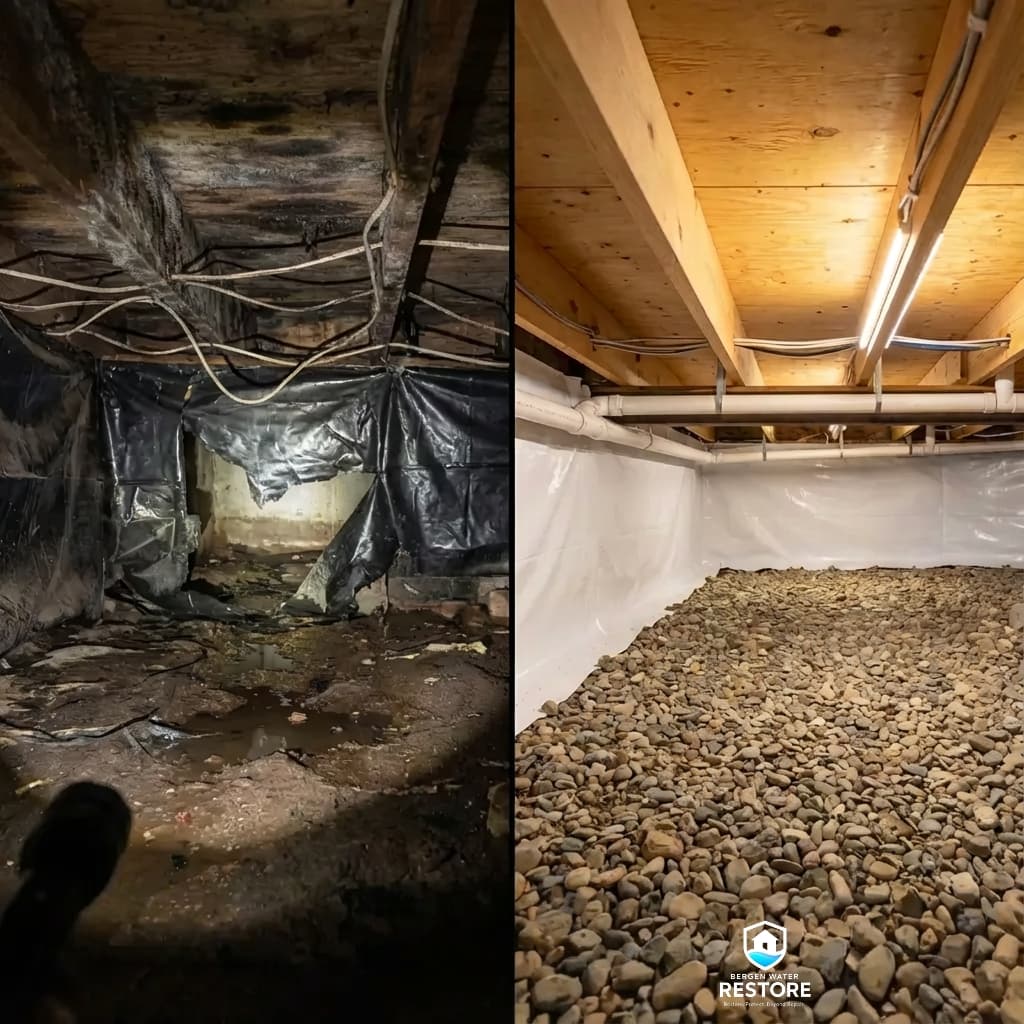
Real estate inspection found heavy mold growth on floor joists and vapor barrier in crawl space. Sale contingent on professional removal.
Full encapsulation protocol: removed old vapor barrier, wire-brushed all joists, applied antimicrobial treatment, installed commercial-grade vapor barrier, and improved ventilation.
Passed re-inspection with flying colors. Sale completed on schedule. New owners received 5-year warranty on work.
Localized Mold Removal & Repair
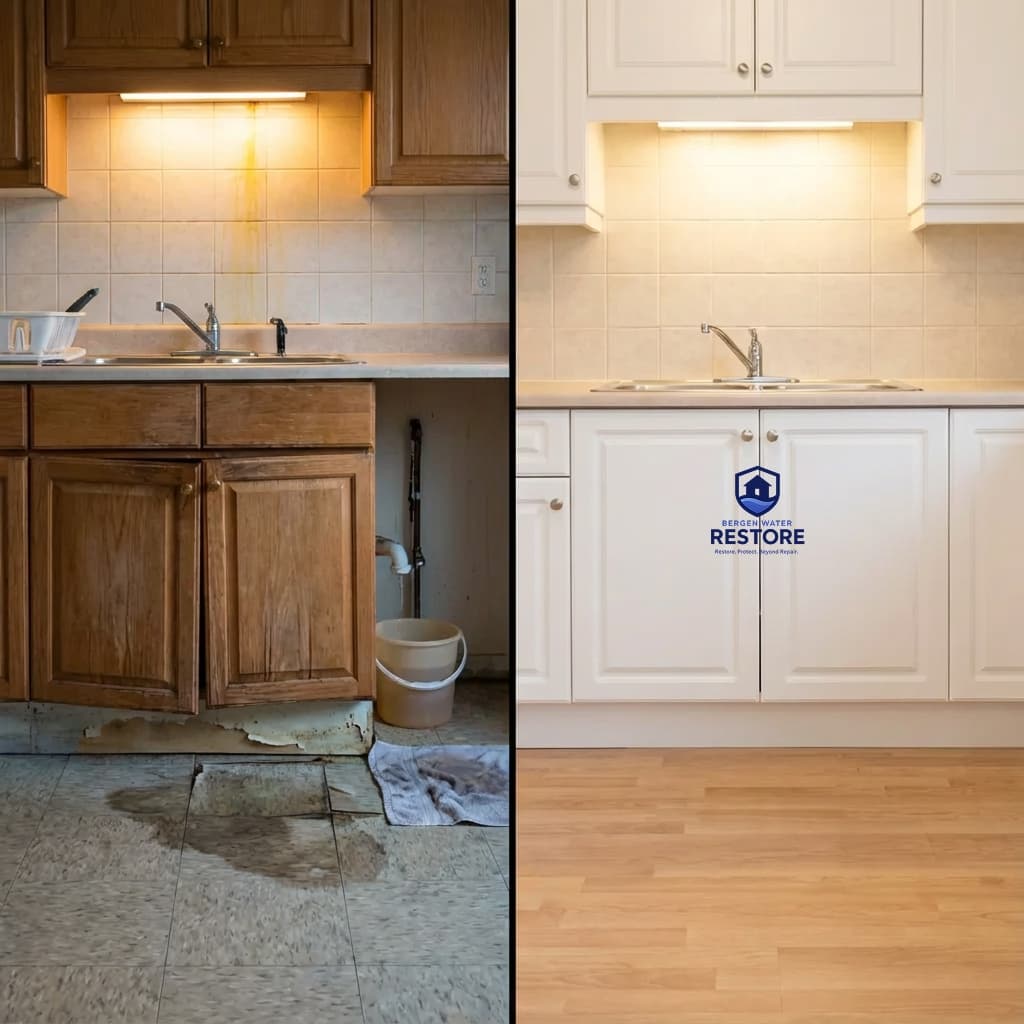
A slow dishwasher supply line leak soaked the toe-kick area and behind lower cabinets for months, producing mold on cabinet backs, adjacent drywall, and subfloor. Homeowner smelled mustiness and noticed staining under the sink.
Removed affected cabinet bases and limited demolition of adjacent drywall, dried framing and subfloor with targeted injection drying, HEPA-vacuumed all exposed surfaces, applied EPA-registered antimicrobials, and replaced damaged cabinet components with moisture-resistant materials. Corrected dishwasher plumbing and added braided stainless flex line.
Kitchen returned to safe, usable condition within 5 days. Clearance testing and photo documentation confirmed mold removal; homeowner reported no lingering odors and appliances inspected for leak prevention.
Need similar help? We're ready 24/7
Call (201) 500-2332Local expertise, fast response, and clear communication
30 years serving local homes and businesses
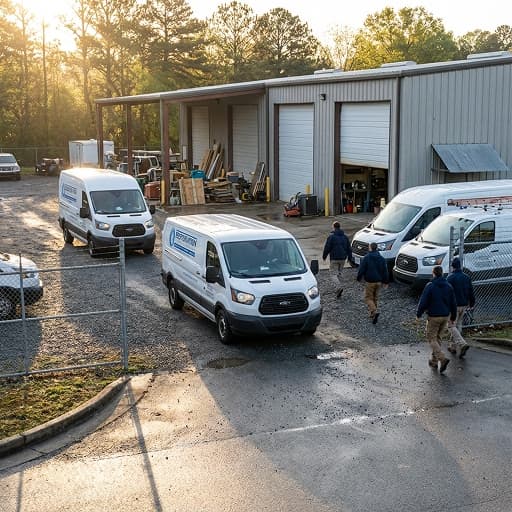
Based in Hackensack with crews ready 24/7
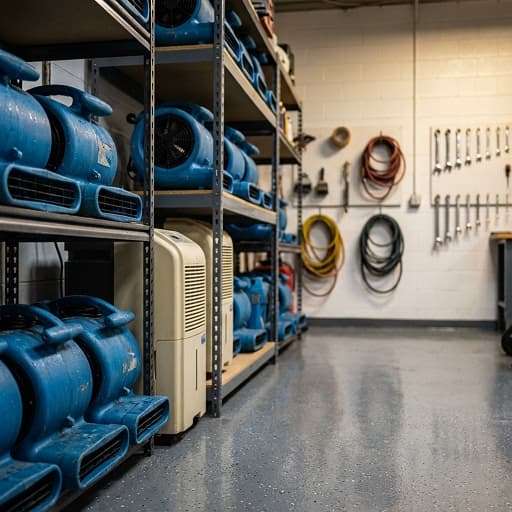
Industrial-grade tools and technology
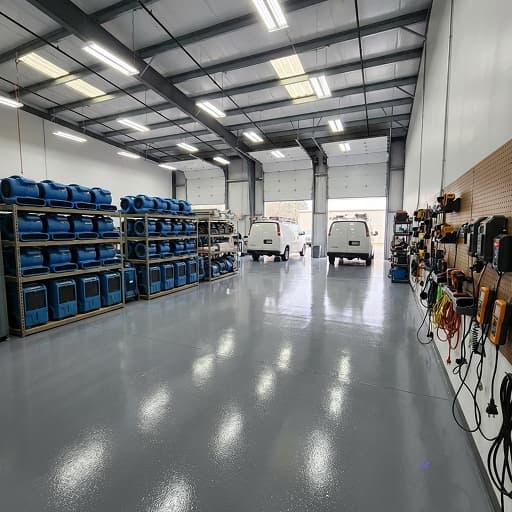
Preferred vendor for State Farm, Allstate, Liberty Mutual
Safe containment, thorough removal, and verified air quality clearance.
Identify sources and affected areas
Prevent cross-contamination
Remove contaminated materials safely
Improve air and reduce humidity
Confirm remediation success
Need mold remediation you can trust? Call us 24/7 or Get a mold assessment
4.9/5 stars from 500+ Google reviews
Small mold patch from shower leak. Removed safely, treated area, recommended better ventilation. Two-day job, reasonable price. No return after 6 months.
Linda H.
Wyckoff, NJ
Mold on bedroom window frames from condensation. Cleaned & applied antimicrobial treatment. Professional crew, no mess. Very satisfied.
Gary F.
Rutherford, NJ
Closet mold after humid summer. Removed drywall, dried thoroughly, sealed properly. Ran air scrubbers. No health issues since, smell gone.
Sharon D.
Garfield, NJ
Everything you need to know
Mold removal refers to cleaning and treating small surface mold (less than 10 sq ft) on non-porous materials. Mold remediation is a comprehensive process for larger contamination: containment, removal of porous materials, HEPA filtration, and clearance testing. For small bathroom mold or localized patches, removal may be sufficient. For attic, basement, or multi-room growth, full remediation is required.
EPA guidelines allow DIY cleaning for small areas (less than 10 square feet) on non-porous surfaces using detergent and water. However, professional removal is recommended for: mold in HVAC systems, hidden mold in walls, contamination from sewage or contaminated water, occupants with allergies/asthma, or growth exceeding 10 sq ft. Improper DIY attempts can spread spores and worsen contamination.
We use containment barriers and negative air machines to maintain lower pressure in the work area, pulling air (and spores) away from clean areas. HEPA vacuuming removes loose spores before wet cleaning, and surfaces are treated with antimicrobials to kill remaining mold. All contaminated materials are bagged in the work area before removal. Air scrubbers with HEPA filters capture airborne spores throughout the process.
Bleach kills surface mold on non-porous materials (tile, glass) but doesn't penetrate porous materials (wood, drywall), leaving roots intact. Bleach also loses effectiveness quickly, and fumes can irritate lungs. We use EPA-registered antimicrobials and fungicides specifically designed for mold remediation, which penetrate deeper and provide longer-lasting protection.